Sunday, December 16, 2007

the virgin of flames

the virgin of flames


the virgin was important to the people here. not only as a symbol of the adopted religion of Catholicism, but because she was a brown virgin who appeared to a brown saint, Juan Diego. She was also a symbol of justice, of a political spirituality. He had watched every year the procession to her, her effigy carried high through the streets of East L.A. starting from the corner of Cesar Chavez, held up, aloft, like a torch. That procession had been an annual event from the thirties, Iggy told him... The Virgin appeared here often, to reassure her people no doubt. In the Winchell's Donut Shop on Fourth and Soto, hovering in the window for the longest time, transforming the local treat into the most sought after cure for every ailment and malaise... Rumors of these apparitions spread by word of mouth and fast. The news was wrapped in Big Macs and passed over counters, it filled buckets of K.F.C., was whispered in the hush of washing machines in the Laundromat, passed out on the street between passersby and even between the dealers and their clients.

--The Virgin of Flames
, by Chris Abani

californian christmas tree

miffy in the tree

Saturday, December 8, 2007

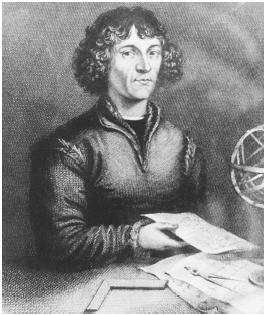
the Copernican Myths

This is a rather long-winded excerpt but part of a fascinating article "The Copernican Myths" by Mano Singham that I've been thinking a lot about lately as well as another million things.

It's important to always question and think critically about what people tell you, and history, which was always presented in such a boring, dry way to me as a teenager. History has become much more interesting to me now as I grow older, and just as importantly, now that I've travelled to some nice parts of world where these events took place. The two-dimensional stories, dry texts and fairytales grow fleshed out and colorful and full of many more social, political and economic implications than i could ever imagine!


Let us start with the myth that the Copernican model was opposed because it was a blow to human pride, dethroning Earth from its privileged position as the center of the universe... (Scholar Dennis Danielson) points out that in the early 16th cenutry, the center of the universe was not considered a desirable place to be. "In most medieval interpretations of Aristotelian and Ptolemaic cosmology, Earth's position at the center ofthe universe was taken as evidence not of its important but... its grossness."

In fact, ancient and medival Arabic, jewish and Christian scholars believe that the center was the worst part of the universe, a squalid basement where all the muck collected. One medieval writer described Earth's location as "the excrementary and filthy parts of the lower world." "We humans, " another asserted, are "lodged here in the dirt and filth of the world, nailed and rivetted to the worst and deadest part of the universe, in the lowest story of the house, and the most remote from the heavenly arch." In 1615 Cardinal Robert bellarmine, a prominent persecutor of Galileo, said that "the Earth is very far from heaven and sits motionless at the center of the world."

In Dante's Divine Comedy, hell itself is placed in Earth's innermost core. Dante also speaks of hell in ways consistent with Aristotelian dynamics--not full of flames, which would be displaced skyward by the heavier Earth, but as frozen and immobile.

By contrast, heaven was up, and the further up you went, away from the center, the better it was. So Copernicus, by putting the sun at the center and Earth in orbit around it, was really giving its inhabitants a promotion by taking them closer to the heavens.

...The actual religious reaction to the heliocentric model also differs from folklore. For one thing, Copernicus did not seem to fear religious opposition to his ideas. After all, he was a reputable cleric himself. He even dedicated his book to Pope Paul III with a letter in which he apologized for the seemingly outlandishness of his suggestion that the Earth moved. He explained that he was forced to his hypothesis by the inadequacy of the Ptolemaic system for constructing calendars and predicting the positions of the stars. A cardinal and a bishop were among those who urged him to publish his book. In fact, for 60 years after Copernicus' death for just two months after its publication, De Revolutionibus was read and least partially taught at leading Catholic universities...

For many years after the publican of De Revolutionibus, while Copernicus' ideas remained within the mathematical astronomy community, authors of more popular books on astronomy and cosmology were either unaware of his work or chose to ignore it. A few nonastronomers did ridicule it--not for being heretical but for promulgating the patently absurd idea of a moving earth.

It was through popularizers, some of them poets, that Copernicus' ideas became more widely known and began to spark religious opposition. But here too, the actual history is surprising. Opposition arose initially among Protestant groups rather than from the Roman Catholic Church.

(Martin) luther spoke out against heliocentrism in 1539, saying that the idea of a moving Earth moving around a stationary Sun clearly went against the account in the book of Joshua that says Joshua commanded the Sun to stand still...

The conflict between scripture and Copernicanism was not limited to verses that involved the motion of Sun or Earth. The realization was growing that acceptance of Copernicanism raised other profound theological difficulties as well...the problems just kept multiplying:

(Kuhn: )" If... the Earth were merely one of six planets, how were the stories of the Fall and Salvation, with their immese bearing on Christian life, going to be observed?.. If the universe is infinite, as many of the latter Copernicans thought, where can God's Throne be located? In an infinite Universe, how is mant o find God or God man?"

As time went on, Copernicus' ideas were seen as seriously disturbing to Christianity; they had to be countered. Soon the Bible became the main weapon used against Copernicus... Religious bodies undertook what was essentially a propaganda war against Copernicus.

People started calling Copernicans infidels and atheists and urged their repression... What probably happened was that after the heliocentric model had been well established, the location of the Sun did come to be perceived as a privileged place. So people ready back into history the newly believed excellence of the center... The demotion idea may have been introduced as part of the effort to rally nonscientific religious people to turn against Copernicanism by appealing to their pride as human beings.

(The Catholic Church's) ban on Copernicus remained until 1822, and his book remained on the forbidden list until 1835. In fact it was only in 1992 that Pope John Paul II lifted the edict of inquisition against Galileo....

What can we learn from all this? The story of the Copernican revolution shows that the actual history of science often bears little resemblance to the popular capsule versions that are learned in school or college or portrayed in textbooks and the popular media. Steve Weinberg calls them "potted history." The true story is much more complicated, but it's also a lot more interesting
.

Monday, November 26, 2007

diabolical views

noticeably chillier up here

I've only been here a few weeks, but at any given moment my mouth is hanging open, gaping at the crazy splash of fog and light and sea that nature throws at you. This is an incredibly beautiful city; I'm not sure that I've lived in a more stunning place in the world, although there were many beautiful moments in Los Angeles and New York. The air is fresh here too, incredibly so for a place like this, and we find ourselves constantly driving to mountaintops of which there are many.

We're tourists in the city we live in. People are always dropping by too; a friend we met in Berlin had been out of the country for six years with absolutely no visits inbetween. He's on this West Coast tour and we're having a lot of fun enjoying the crazy boisterous life in America. Only W can appreciate how weird and interesting America is, and he looks a little dazed, all this new information, all these incredible landscapes. We sit contemplating the Sonoma Valley, how beautiful it is, as the tour guide tells us tales of mega mergers and corporate distribution, and it's incredible how this small strip of land influences so much outside of its scope.

Most of the wineries we visit are not very exclusive, so they admit a certain kind of tourist like us, and we're fine with that, because I don't know enough about wine to know the difference between the really amazing stuff and the very ordinary. The really good places require guest lists and are quite particular; or so people say. i have no idea what it's really like. The guides are patient, treating us like very eager but stupid children, explaining in excruciating detail how to taste wine. It's not like we haven't done it before, but we've never had things laid out end to end.

There's this beautiful little Tuscan restaurant in downtown Sonoma with a huge poster of Lucca, and just like Lucca there are lots of little hokey touches to remind us that this is authentically Italian and indeed a family restaurant. Black and white photographs of grandma; when I went to Lucca the last time they did the same thing to assure us that everything was small-scale, even though they were more efficient and businesslike than they'd like to admit. The wineries in Sonoma are incredible stone affairs made to look like postcards from Italy, the driveways lined with incredible cypress trees.

A friend's family tells us where to go to get the very best South Indian food in the Bay Area, and they warned us that it would be packed, which it was--big brawling families and packs of tech workers and pairs of young men in North Face and preppy upturned collars.

They're working at these companies that we were always aware of when we were working in Berlin, addresses where important things were sent, where deals were made: Sunnyvale, San Jose, Cupertino, Mountain View... they're all mashed up next to each other at the south rim of the Bay.

Strangely enough, everyone's speaking English, and a wife lectures a couple facing her, "The wife makes these important decisions in the family," while juggling a child on her hip. I'm struggling to eat a dosa the right way, which is always the wrong way, and two guys next to me talk about some kind of industry stuff as a hovering waiter apologizes for my entree being later than my husband's. Everyone's teched out though, mothers pecking at very expensive new laptops and little girls mesmerized by their text messaging.

People my mother's age bike up incredibly steep hillsides, gray-haired women with incredibly muscular legs in designer bicycle wear, the logos and team jerseys from some faraway land across the sea, smiling good naturedly at us as we drive by. Everyone's invariably running, jogging or kayaking somewhere here. The uniform of the day is a hiking North Face jacket; if you're not careful you can go around being overdressed unless you're downtown, where you'll be spoiled by the slim and handsome shop boys in pinstripe suits smoking.

We drive to the highest mountain peak, Mount Diablo, which has the second clearest view in the world after Mount Kilimanjaro, and some bicycles are huffing and puffing up an incredible distance to the top, inadequately clothed in spandex. It's freezing up there, wind whipping you by, but you can run into the tower at the top for protection, which they do, or if you have a parka like me, stand on the cliff's edge and look down from what looks like an airplane's view.

We're always climbing peaks to get good views; from Mount Diablo San Francisco looks like my fingernail and the Golden Gate Bridge is nothing but a toy. As the sun sets, the mountain casts a long shadow across the valley below; I like to thing that if I point my hand upwards I'm creating night for hundreds of people. It's like playing God.


casting a long shadow

Wednesday, November 14, 2007

keep up the good fight


Great spirits have always found violent opposition from mediocrities. The latter cannot understand it when a man does not thoughtlessly submit to hereditary prejudices but honestly and courageously uses his intelligence.

- Albert Einstein